
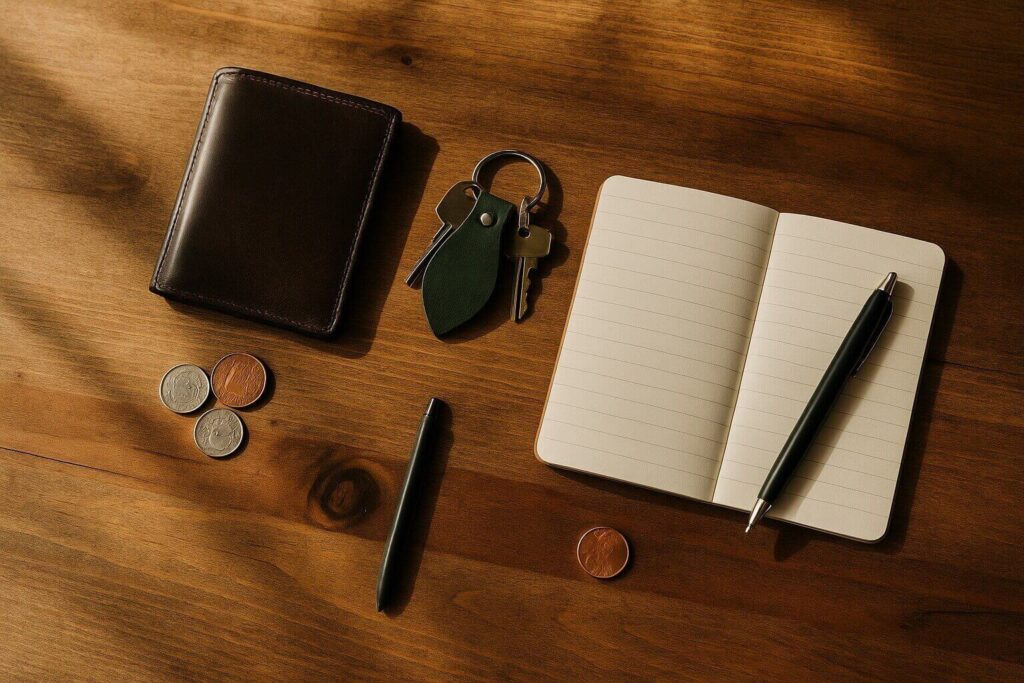
Most of us don’t notice the small weights we pick up every day.
The extra pen, the old receipt, the bulky keychain we’ve meant to fix— our everyday carry grows heavier without us realizing it. It all adds up — not just in our pockets, but in our heads.
Every time you walk out the door, what you carry shapes how you feel. A cluttered pocket is a cluttered mind. But when you pare it back — when every item earns its place — you start to feel different. Lighter. More deliberate.
This isn’t about buying the most minimal gear or going full tactical. It’s about creating space — in your carry and in your thoughts. Because the lighter your everyday load, the clearer your focus becomes.
Let’s walk through a simple reset — the kind that helps you move through your day with a calm pocket and a clear mind.
Why Everyday Carry Matters
We don’t usually think about what’s in our pockets as a reflection of what’s on our minds. Yet the two are closely connected. When your everyday carry is cluttered, it creates small points of friction you feel all day long — a messy keychain, a crowded wallet, or a bag that’s heavier than it should be. Each tiny decision adds noise to your focus.
Your brain notices clutter even when you think you don’t. Psychologists call it cognitive load — the subtle mental effort required to manage too much information, too many objects, or too many open loops. It’s the same reason a messy desk feels stressful before you’ve even started working; as one study explains, the visual distraction of clutter increases cognitive overload and can reduce working memory (Royal Australian College of General Practitioners).
By contrast, simplifying what you carry helps you think more clearly. Because when every item has a purpose, you stop wasting energy deciding, searching, or second-guessing. Instead, your attention shifts to what truly matters — the work in front of you, the conversation you’re having, the walk you’re taking.
In a way, your pockets are a mirror. What you carry every day shows what you value and how prepared you want to feel. But it can also reveal where you’re holding on to things you no longer need. That’s why taking a moment to reset your carry isn’t just about organization; it’s about creating space for calm and control in the middle of your day.
If you’re starting small, you might also like The 1% System: Simple Daily Habits That Build the Life You Want — a quick way to turn this reset into a steady routine.
Step 1: Empty and Audit
To begin, take everything out. Empty your pockets, your bag, or even the small drawer in your nightstand that collects loose change. Once you see your everyday carry in one place, it’ll help you notice how much has quietly built up over time.
After that, look at each item and ask a single question: Do I use this every day?
If not, then it may be adding weight without adding value.
Next, sort what you find into three quick piles — keep, replace, and remove.
- Keep what you use often and that makes daily life smoother.
- Replace anything bulky or broken with something lighter or better made.
- Remove what simply creates clutter.
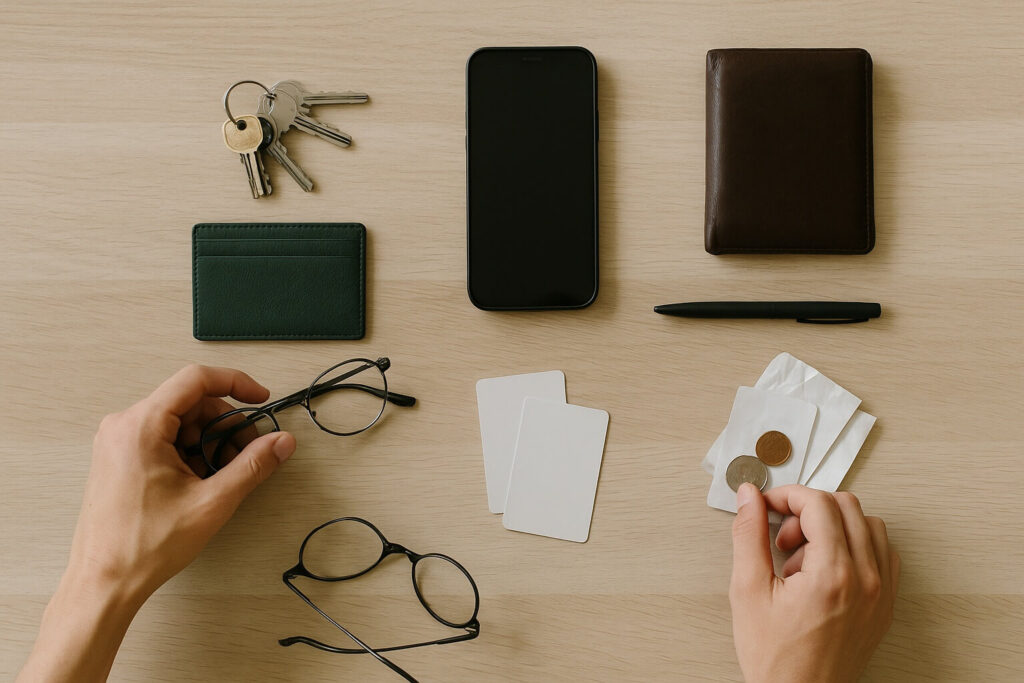
As you sort, you’ll notice how even a small reduction feels freeing. You might swap a thick bifold wallet for a slim card holder or decide that a lighter key organizer would save pocket space and patience alike. Those small changes add up quickly.
Once you’ve pared things down, take a slow breath. The reset isn’t just about carrying less — it’s about noticing what feels essential. Because once you see that clearly, every decision afterward becomes easier.
Step 2: Simplify the Essentials
Now that you’ve cleared the clutter, it’s time to rebuild your everyday carry with intention. This step isn’t about owning the fewest things possible — it’s about keeping only what adds calm, reliability, and ease to your day.
To start, choose one dependable version of each essential. One pen that always writes smoothly. One wallet that holds just what you actually use. One key organizer that keeps things flat and silent in your pocket. When each item has a clear purpose, your mind stays lighter too.
For example:
- A slim wallet that slides easily into any pocket and limits you to what matters — something minimalist, slim, and durable.
- I personally like the Bellroy Mag Wallet — it holds just enough, stays flat in your pocket, and adds a bit of calm design to your daily carry.
- A compact key organizer that removes bulk and noise, keeping everything flat and easy to find.
- A small notebook and pen for quick ideas or gratitude notes — the kind you actually enjoy using every day.
- A lightweight sling or cross-body bag for everything else — practical enough for errands, simple enough for travel.
If you’d like ideas for simplifying your everyday carry, check out our Recommended Gear & Resources → — a short, curated list of products that align with the same minimalist, intentional living philosophy.
As you upgrade, remember the goal isn’t to show off gear. It’s to create a calm foundation you can rely on every day. Because when your essentials are simple, you move through your morning with fewer decisions and more focus.
Finally, take a moment to notice the difference. Carrying less isn’t just practical — it’s peaceful. And that quiet confidence tends to follow you everywhere you go.
Step 3: Maintain the Reset
The real progress starts after the cleanup. Once your everyday carry feels lighter, the goal is to keep it that way. Because clutter always tries to creep back in, you’ll need a simple rhythm for staying ahead of it.
Set a small reminder every few weeks to empty your pockets or bag and take a quick look at what’s snuck in. Over time, you’ll begin to notice patterns — receipts you never need, extra cards you rarely use, or gadgets you thought you’d carry but never reach for. When you see those patterns, let them guide your next round of adjustments.
As a result, this reset becomes less about the stuff and more about awareness. You’ll start to recognize when things begin to pile up — not just physically, but mentally too. Every mini-audit brings back a sense of control and clarity.
Eventually, your lighter carry turns into a quiet kind of discipline. It’s not about perfection; it’s about intention. When you stay consistent, your pockets, bag, and mind all reflect the same calm simplicity you’ve been building elsewhere in your life.
That’s why this practice matters: it’s a physical reminder of your priorities. The less you carry, the more you notice — the walk, the morning light, the space you’ve created for new ideas.

Clear Space, Clear Mind
When you reset what you carry, you’re not just organizing your pockets — you’re training your mind to notice what matters. Each item you choose to keep becomes a quiet statement of purpose.
So take a few minutes this week to lighten your load. Clear one bag, one pocket, or one drawer, and feel how quickly that small win builds momentum. Because clarity grows when clutter shrinks.
If you’d like more ideas for simplifying your space and systems, visit our Recommended Gear & Resources → page or explore Staying Consistent: How to Keep Moving When Motivation Fades → for ways to keep your reset habits strong week after week.
Or, join the Earned Future newsletter for weekly tips on building calm, intentional routines — one small reset at a time.