

Most routines fall apart for the same reason: they rely too much on motivation and not on habit stacking.
You wake up determined, drink water, stretch… and by day four, life gets loud again. The routine you wanted to build fades into the background. Not because you failed — but because you were trying to build a new habit from scratch, without any support.
Habit stacking changes that.
It’s a simple way to make healthy routines stick by attaching new habits to ones you already do without thinking — waking up, making coffee, brushing your teeth, opening your laptop. These everyday anchors give your new habits a home, turning “I hope I remember” into “I do this naturally.”
Let’s walk through how habit stacking works and how to build a routine that finally holds — even on the busy weeks.
Why Habit Stacking Works
Most new habits fail because they float in your day. They don’t have a clear time, place, or anchor.
Habit stacking removes all that friction.
Instead of creating a brand-new routine, you attach a tiny new action to something you already do automatically.
- After I pour my coffee → I drink a full glass of water.
- When I finish brushing my teeth → I stretch for 30 seconds.
- When I open my laptop → I check my calendar, not my inbox.
- After I put my keys down → I walk for two minutes.
The anchor is what makes it work.
Your brain already recognizes the first behavior. Adding a small second step creates an easy loop your day can remember — even when energy is low.
If you’ve read The 1% System or Staying Consistent, you’ll recognize the same pattern: small, repeatable cues build quiet momentum.
Start With What Already Happens
You don’t need a complicated plan. You just need one reliable anchor.
Look for habits that happen almost every day:
- Waking up
- Making coffee
- Starting the shower
- Locking the door
- Sitting down at your desk
- Putting your phone on the charger
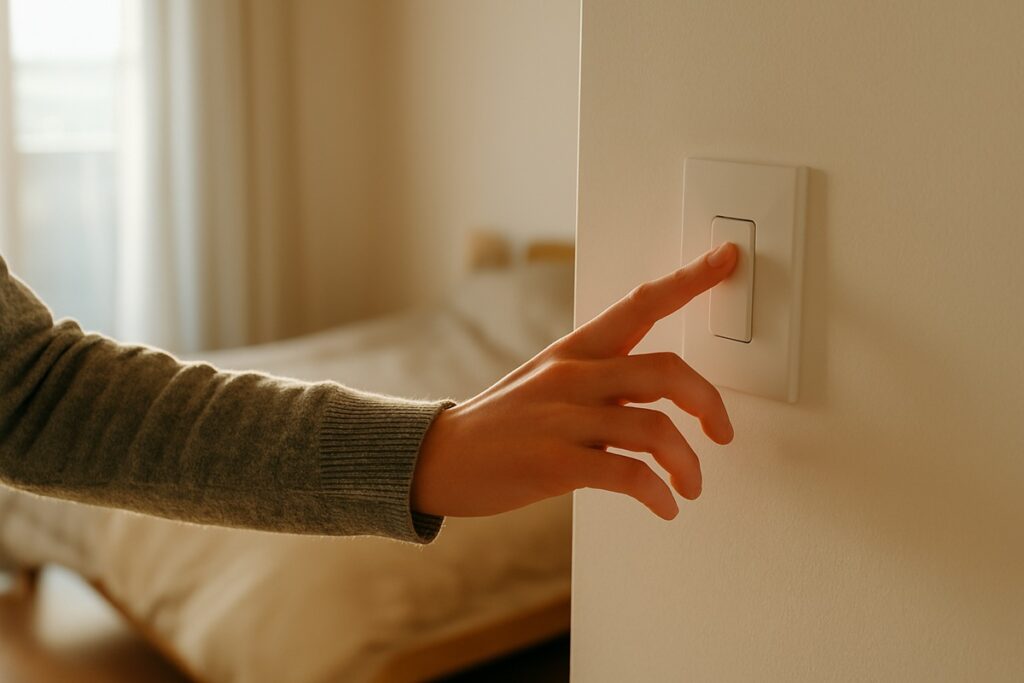
- Turning off the lights at night
These are steady moments — places where adding one gentle habit feels natural, not forced.
A good anchor is:
- Predictable (you do it daily)
- Visible (you notice when it happens)
- Stable (the timing doesn’t swing wildly)
Once you find a solid anchor, the hardest part is already done.
Build Your First Habit Stack
A habit stack has a simple structure:
After I [existing habit], I will [new tiny habit].
That’s it.
Start with something so small you can finish it in under 30 seconds.
This keeps resistance low and momentum high.
Examples:
- After I brew my coffee, I fill my water bottle.
- After I step out of the shower, I take five slow breaths.
- When I drop my keys, I tidy one item on the counter.
- When I sit at my desk, I write one sentence.
- After I plug in my phone, I stretch my neck and shoulders.
Small actions are the point — they’re easy to repeat, and repetition is what builds identity.
Once the small habit sticks, you can expand it naturally.
But don’t begin big. Begin repeatable.

Make Your Stack Stick (Even on Busy Days)
Habit stacking doesn’t rely on motivation. But it does depend on clarity.
Here are three rules that make your stack stronger:
1. Keep the new habit tiny.
You’re training the cue → action loop.
A big habit overwhelms the cue. A small one completes it.
2. Use the same anchor every time.
Inconsistency confuses your brain.
Same action, same moment, same trigger → easy repetition.
3. Celebrate the completion, not the size.
A single deep breath counts. Then, even a two-second reset counts. In the same way, one drawer tidied counts too. As a result, these small moments create steady proof that you’re moving forward.
Each moment of “I did it” builds trust — the quiet kind that grows into rhythm.
This is the same principle behind The Power of Small Wins: small, visible steps create momentum far faster than perfect routines ever do.

Build a Morning Stack
Morning is the easiest place to begin because your routine is already predictable.
Here’s a simple starter version:
- After I turn off my alarm → I sit up and put both feet on the floor.
- After I brush my teeth → I drink a full glass of water.
- While I make coffee → I take five slow breaths.
- After I open the blinds → I stretch for 20 seconds.
That’s a complete habit loop in under three minutes — and it sets the tone for the rest of your day.
Build an Evening Stack
Evening is where most routines break down — you’re tired, distracted, and ready to check out.
That’s exactly why habit stacking shines here.
Try this:
- After I plug in my phone → I clear my nightstand.
- When I wash my face → I pick tomorrow’s outfit.
- After I turn off the kitchen light → I drink a small glass of water.
- When I sit in bed → I write one line in my notebook.
Tiny steps → easier mornings → steadier weeks.
When Motivation Fades, the Stack Carries You
There will be days when motivation disappears.
The routine helps you anyway.
Why?
Because the anchor still happens.
You still brew coffee.
Still brush your teeth.
You still open your laptop.
You still plug in your phone.
Your life pulls you into predictable motions — habit stacking simply piggybacks on the motions that already exist.
On hard days, your stack becomes a lifeline: a small proof that you still showed up, even if the day wasn’t perfect.
That’s consistency.
Not intensity — returning to the small things that keep you grounded.
A Calm Close
Healthy routines don’t need to be dramatic. They just need to be anchored.
Find one moment that already happens.
Attach one tiny habit.
Repeat until the stack becomes part of your day.
When it feels natural, build the next one.
Slow, steady anchors create routines that last — the kind that simplify your life, steady your energy, and help you become who you’re already trying to be.
Your first step?
Pick one anchor for tomorrow morning.
Let the stack grow from there.