
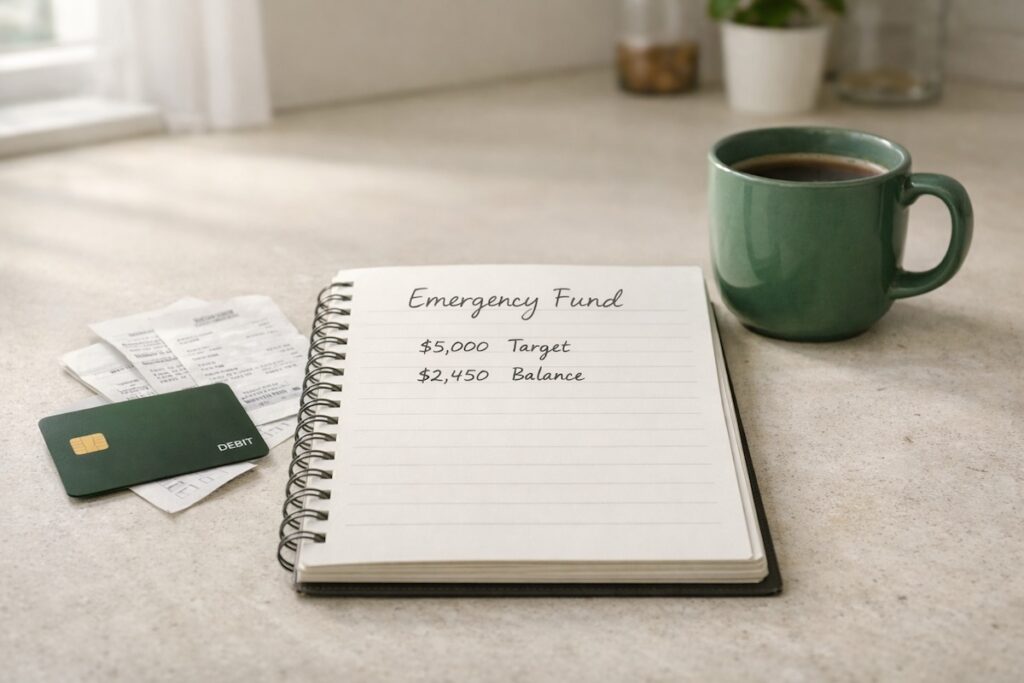
The best place to keep your emergency fund is usually simpler than it seems, but the number of options can make it feel unclear. Checking, savings, high-yield accounts, and even cash all sound reasonable, which makes it harder to choose one and move forward.
Most people don’t struggle with saving. They struggle with deciding where this money should actually live—especially when income doesn’t look the same every month.
Once that decision is clear, everything else starts to settle into place.
If you haven’t fully defined what this money is meant to do yet, it helps to step back and understand the real purpose of an emergency fund before deciding where to keep it.
What this money is actually for
An emergency fund isn’t meant to grow aggressively or be optimized. Its job is to create stability when something changes—income shifts, expenses show up, or life doesn’t go as planned.
If you’re still deciding how much to save, it helps to start with How to Decide How Much Emergency Fund You Need before choosing where to keep it.
Where you keep it should match that purpose. It should feel steady, accessible, and easy to leave alone.
The 3 rules that matter
The best place to keep your emergency fund comes down to three things: access, stability, and simplicity.
1. It needs to be accessible.
You should be able to reach the money without delay or friction. It doesn’t need to be instant cash, but it shouldn’t take multiple steps or complicated transfers when something goes wrong.
2. It needs to be stable.
This money isn’t meant to fluctuate. If the value can drop—even temporarily—it’s no longer serving its purpose when you actually need it.
3. It should stay simple.
It shouldn’t require much attention to maintain. The more you have to manage or think about it, the more likely the system is to break down over time.
When those three are in place, the system holds.
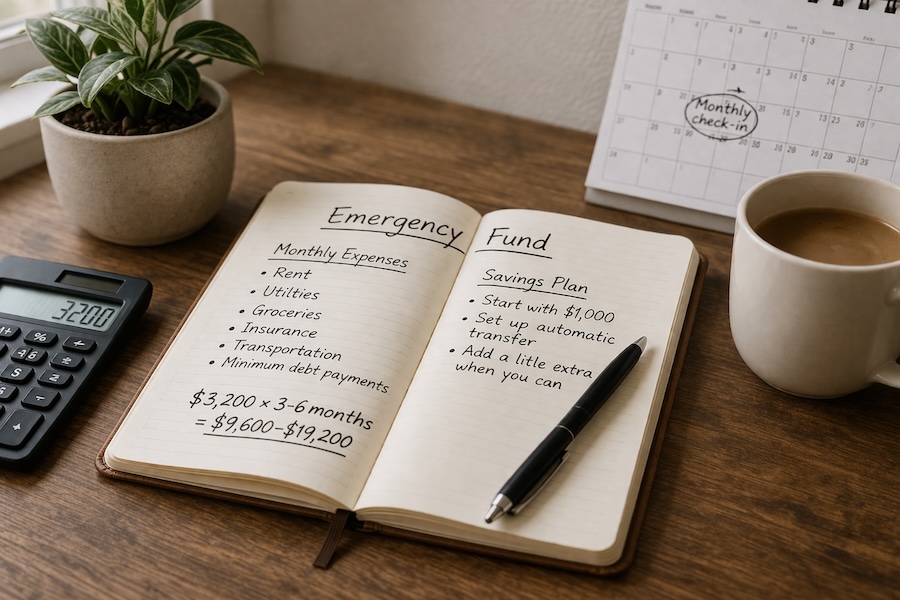
What actually works (and why)
A checking account is the simplest option because it’s immediate and familiar. For someone just getting started, that ease can matter. Over time, though, it can blur the line between emergency money and everyday spending, which makes it harder to leave untouched.
A savings account creates a bit more separation. The money is still accessible, but it sits outside your daily flow. That small distance is often enough to protect it without adding friction.
A high-yield savings account builds on that same idea. It keeps the structure simple while allowing the money to earn something quietly in the background, instead of sitting idle.
If you don’t already have one, a high-yield savings account like CIT Bank Platinum Savings is a simple place to start. It keeps the money separate without adding anything complicated.
For most people, the high-yield savings account is the best fit because it balances access, stability, and simplicity without adding friction.
The real tradeoff
This decision isn’t about finding the highest return. It’s about balance.
Prioritizing returns introduces risk. Keeping everything instantly accessible removes separation. Trying to optimize every detail adds complexity that’s hard to maintain.
A simple system that works consistently will always outperform one that looks better on paper but requires constant attention.
A simple setup that holds up
For most people, a clean setup ends up looking simpler than expected. The majority of the emergency fund sits in a savings account—often a high-yield account—where it stays separate but accessible. Some people also keep a small buffer in checking for minor surprises, but the goal isn’t complexity. It’s just enough structure to keep the money protected without needing to think about it constantly.
What to avoid
Avoid investing your emergency fund. Even small fluctuations matter when stability is the goal.
Avoid splitting it across too many accounts. More moving parts create more chances for things to drift.
And avoid making it too hard to access. If it feels complicated to use, it won’t serve its purpose when you need it.
Where this leads next
Once you’ve chosen the best place to keep your emergency fund, the uncertainty is gone. You’re no longer weighing options—you’re following a system that fits your life.
From there, the next step becomes much simpler: building it steadily without disrupting everything else.