
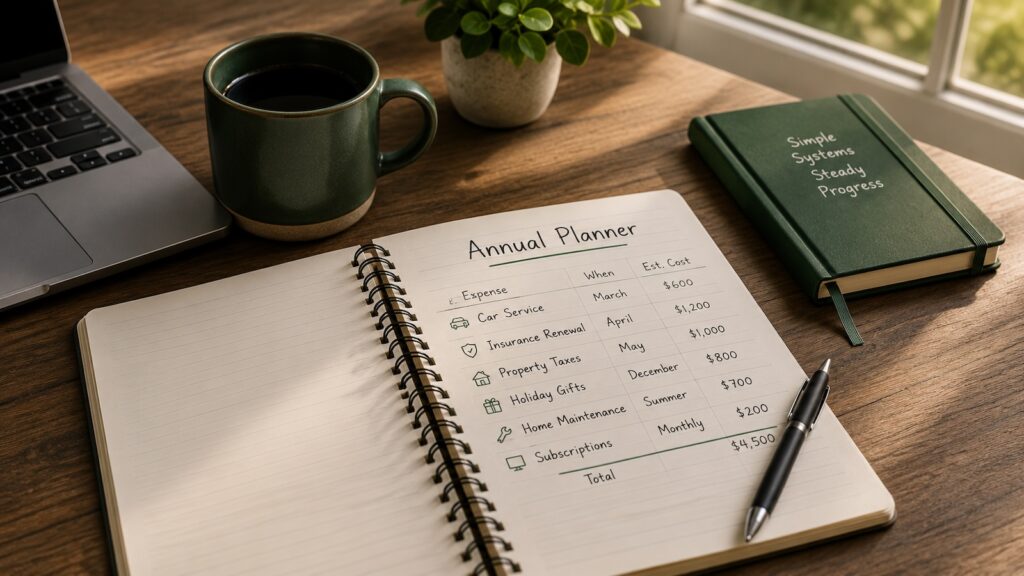
The purpose of sinking funds is not to make your money more complicated. It is to protect your savings from the normal expenses that keep showing up, whether you planned for them well or not.
If you have ever built up savings and then watched tires, insurance, holidays, repairs, or annual bills slowly pull it back down, you already understand why this matters. In the last article, we looked at the difference between emergency funds and sinking funds. This article goes one step deeper: what is the purpose of sinking funds once you understand the difference?
Most financial stress does not come from one dramatic emergency. Much of it comes from normal life arriving unevenly. Cars need maintenance. Insurance renews. Holidays return. Homes need repairs. Those expenses are expected, but without room to absorb them, they begin acting like emergencies.
A sinking fund gives those expected costs a clear job before they become urgent. It protects your emergency fund, your monthly cash flow, and the progress you’re trying to make toward other goals.
Why Normal Life Keeps Draining Your Savings
Savings can feel strange when you are technically doing the right thing but still feel like you are not getting ahead.
You build a cushion. You feel a little better. Then life starts pulling from it. A car repair takes some. A holiday takes some. An annual bill takes some. Something around the house takes some. Before long, the savings balance that made you feel steady starts looking thin again.
This is what makes it frustrating. The money did not always go toward careless spending. In many cases, it covered completely normal things: responsibilities, real expenses, and decisions that simply had to be handled.
But it still feels discouraging because the money you thought was progress keeps disappearing.
The issue is usually not the savings account itself. It is that the same money is expected to protect against emergencies, cover irregular expenses, support future goals, and still provide peace of mind.
When every expected cost reaches into the same pile, savings starts feeling unreliable. The balance may look available, but some of it already has future work attached to it.
The purpose of sinking funds is to make those future jobs visible before they become urgent.
The Purpose of Sinking Funds Is to Protect Your Emergency Fund
An emergency fund has a specific job. It protects you when life disrupts your normal plan.
That could mean income loss, a sudden medical cost, urgent travel, or a major repair you truly could not see coming. Emergency money exists to keep life stable when something unexpected hits. It gives you options when you do not have time to slowly prepare.
Sinking funds protect a different part of your life.
They are for expenses that may not happen every month but are still part of normal life. Vehicle maintenance. Insurance premiums. Property taxes. Holidays. School costs. Routine home repairs. Replacing something that is slowly wearing out.
Expected costs may still be expensive, but they are different from true emergencies. When everything pulls from emergency savings, that fund never gets to do the job it was built for. Sinking funds protect expected expenses so your emergency fund can stay focused on unexpected disruption.
A Sinking Fund Is a Job, Not a Separate Account
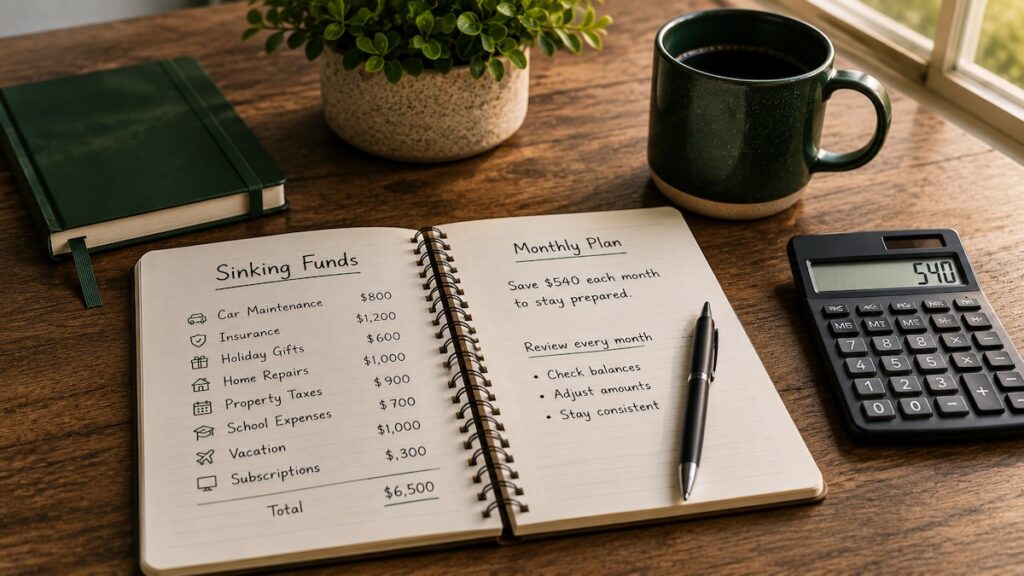
This is where sinking funds often get explained in a way that turns people off.
You hear the phrase and picture a dozen little accounts for tires, Christmas, insurance, vacations, taxes, home repairs, school costs, and every other future expense. Some people like that setup because it makes the money easy to see. If that works for them, great.
But that is not the purpose of sinking funds, and it is not the only way to use them.
A sinking fund is not really about the account. It is about the job.
The job is simple: set aside money for an expense you can reasonably expect before it becomes urgent.
That money can live in a separate account if that helps you. It can also live inside one main high-yield savings account, one larger cash buffer, a spreadsheet, a note, or a simple monthly review. The method matters less than the clarity.
What matters is that you know the money is not truly free to spend.
It may be sitting in the same account as your emergency fund, but it is not doing the same job. Part of that balance protects you from disruption. Another part waits for expected costs, while the rest may support goals or future growth.
When those roles stay clear, your savings starts to feel more honest. You are no longer looking at one balance and guessing how much is actually available. You understand what part of that balance is protecting you and what part is already preparing for normal life.
What the Purpose of Sinking Funds Looks Like in Real Life
The easiest way to understand sinking funds is to think about the expenses that always seem to sneak up, even though they were never really hidden.
Take car maintenance. You may not know exactly when you will need tires, brakes, or repairs, but you know the vehicle will need money eventually. If nothing is set aside for that, the repair feels like a disruption. If you have already been letting some money wait for car costs, the same repair feels less chaotic.
The bill may still be annoying. But it does not have to wreck the month.
The same thing happens with holidays. Christmas comes every year, but it can still feel stressful when all the spending has to come from one month’s cash flow. Gifts, food, travel, events, and little extras add up quickly. A sinking fund does not make the holiday free. It just spreads the weight out before December arrives.
Annual bills work the same way. Insurance, property taxes, subscriptions, and other recurring costs become far less disruptive when they’ve been given room before they arrive.
That is the point.
Sinking funds are not there to make every expense painless. They are there to make normal expenses less disruptive.
Why This Makes Your Savings Feel More Honest
One of the hardest parts about saving money is knowing what the balance actually means.
A $10,000 savings balance can feel strong. But if $2,000 of that will probably go toward tires, insurance, property taxes, and home repairs over the next few months, then the full $10,000 is not really available for emergencies.
That does not mean the money is gone. It just means the money already has a job.
Seeing that clearly makes decisions easier. You stop treating every dollar in savings as equally available and start recognizing that different parts of the balance are already waiting for different responsibilities.
You can look at your money and say, “This part protects me. This part is waiting for expected expenses. This part can move toward future goals.”
That is a much calmer way to manage savings than treating one balance like it can solve every problem at once.
The Purpose of Sinking Funds Is Not Perfection
Sinking funds do not require perfect forecasting.
You do not need to know the exact date your tires will wear out. Home repairs do not have to be predicted perfectly. Holiday spending does not need to be guessed down to the dollar. Trying to plan that tightly can make the system feel heavier than it needs to be.
The goal is not perfect accuracy. The goal is less surprise.
Even a rough amount helps. If you know your car, home, holidays, and annual bills usually create pressure throughout the year, you can start giving those categories some breathing room. It does not have to be exact to be useful.
A simple sinking fund might just mean you keep a mental note that part of your savings is already spoken for. It might mean you track a few expected costs in a spreadsheet. It might mean you move a small amount each month into a high-yield savings account and review it once in a while.
The best version is the one you will actually keep using.
If the system gets too detailed, you may avoid it. If it feels simple enough, you are more likely to return to it. That matters more than creating the perfect setup on paper.
Sinking funds are supposed to reduce pressure, not become another thing you have to constantly manage.
A Calm Close
The purpose of sinking funds is to protect your savings from normal life.
Not because normal life is bad. Not because every cost needs its own account. And definitely not because you need a complicated system with endless categories.
Normal life simply costs money in uneven ways.
Some months are quiet. Other months bring tires, repairs, renewals, holidays, school costs, home projects, or bills that do not fit neatly into the regular rhythm. When those costs have no place to land, they start acting like emergencies.
Sinking funds give those expenses a place before they become pressure.
They help you protect your emergency fund, steady your cash flow, and make your savings feel more honest. You stop looking at one balance and hoping it can do everything. Instead, you start seeing the different jobs your money already needs to handle.
That shift does not have to be complicated. It just has to be clear.
Once you understand what sinking funds are meant to do, the next step is learning how to make them practical. You do not need a complicated setup, endless categories, or a separate account for every future cost. You just need a simple structure that gives predictable expenses a place before they become pressure.
In How to Build Sinking Funds That Actually Work, we’ll walk through how to start with the expenses that create the most stress, keep your categories simple, and build a sinking fund system you can actually keep using.
That works better than the current final sentence because it gives the reader a clear reason to click instead of just saying the next step is “learning how.” It also matches the exact next article and keeps the funnel moving naturally.