
A softly lit bedroom with a slightly messy bed and morning light coming through the window, illustrating the difference between sleep and true recovery and why you may still feel tired after resting

Still Tired After Sleeping? You’re Not Actually Recovering

🕒 7 minute readStill tired after sleeping? It’s not always about how long you sleep—it’s about how well you recover. When your days stay mentally “open,” your body never fully resets. Here’s how to create real recovery without adding more to your routine.

Still Tired After Sleeping? You’re Not Actually Recovering Read More »

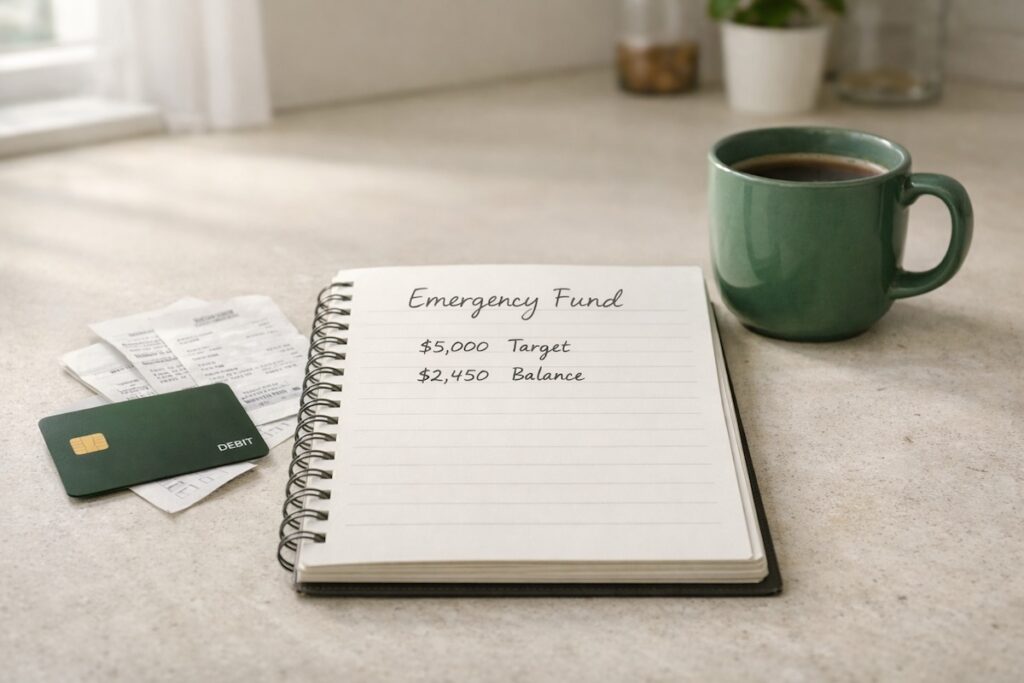
A clean wooden desk with a simple notebook, pen, and coffee mug in soft natural light, illustrating the purpose of an emergency fund and helping readers understand financial stability.

The real Purpose of an Emergency Fund

🕒 7 minute readWhen income comes in waves instead of a steady line, stability matters more than growth. This article explains the purpose of an emergency fund — what it’s designed to do, what it isn’t for, and where it fits inside a simple money system.

The real Purpose of an Emergency Fund Read More »

A simple budgeting workspace with a calculator, notebook, and softly blurred receipt on a wooden desk, illustrating why over-specific budget categories break down and create friction.

Why do Over-Specific Budget Categories Break Down?

🕒 5 minute readOverly detailed budget categories can make a plan feel precise at first, but fragile once real life begins. This article explains why that breakdown happens—and why it’s structural, not personal.

Why do Over-Specific Budget Categories Break Down? Read More »

A calm, minimalist workspace with subtle signs of accumulated effort, illustrating why doing more eventually makes things harder and how intensity increases mental and physical load over time.

Why doing more eventually makes things harder

🕒 9 minute readMost people don’t struggle because they lack discipline. They struggle because the way they’re trying can’t hold up long term. This article explains why intensity feels effective at first, then quietly makes consistency harder over time.

Why doing more eventually makes things harder Read More »

Minimal budgeting dashboard with charts on a clean desk, illustrating monthly budget visibility and helping readers understand why budgets fail without constant attention.

Why Budgets Fail When They Require Daily Attention

🕒 5 minute readMost people think a good budget requires daily attention. They check balances constantly, track spending closely, and try to stay vigilant at all times. When that effort fades, they assume the problem is discipline. But budgets don’t fail because people stop caring — they fail because they’re asked to do a job they were never designed to do.

Why Budgets Fail When They Require Daily Attention Read More »

Laptop displaying a simple monthly budget overview, illustrating what budgeting is supposed to do by providing clarity without constant attention.

What budgeting is supposed to do (and what it isn’t)

🕒 7 minute readMost people think budgeting is about control, discipline, or tracking every dollar. In reality, what budgeting is supposed to do is reduce mental load and uncertainty — not add more work to your life. A good budget fades into the background, giving you clarity without constant attention.

What budgeting is supposed to do (and what it isn’t) Read More »

An open notebook with handwritten budget notes and scattered papers on a wooden desk, symbolizing how a budget works at first but slowly breaks down over time.

Why Your Budget Works at First — Then Slowly Breaks Down

🕒 7 minute readBudgets often work early because attention is doing the heavy lifting. As life gets busier, that attention fades—and the system starts to break down. Here’s why that happens and how to design money systems that last.

Why Your Budget Works at First — Then Slowly Breaks Down Read More »

Glass of water on a nightstand in soft morning light, illustrating a simple habit to hydrate first thing in the morning.

A Better Way to Hydrate First Thing in the Morning

🕒 5 minute readA simple morning hydration habit I use to remove friction before the day starts. No rules, no tracking — just an easier way to hydrate first thing without overthinking it.

A Better Way to Hydrate First Thing in the Morning Read More »

A calm living room with a green mug on a side table, representing a simple money system that works quietly in the background.

How I Keep Money Simple While Still Growing It

🕒 9 minute readKeeping money simple doesn’t mean sacrificing growth. This article explains how I design my finances to stay quiet, intentional, and easy to live with — while still building long-term progress in the background.

How I Keep Money Simple While Still Growing It Read More »

Soft morning light on a bedside table with a notebook, illustrating calm recovery and why you never feel rested.

Why You Never Feel Rested (Even When You Sleep)

🕒 6 minute readYou can sleep enough and still wake up tired. This article explains why you never feel rested even after a full night’s sleep — and how modern life quietly blocks recovery. Learn how to rethink rest, reduce daily overload, and build simple recovery anchors that actually restore your energy.

Why You Never Feel Rested (Even When You Sleep) Read More »

Did you find this helpful?

Yes 👍 Not Really