

Something unexpected comes up, and for a moment, everything feels a little uncertain. You have the money set aside, but you still find yourself wondering when to use an emergency fund without making the wrong call.
Instead of feeling relieved, you hesitate.
You start thinking through every angle. Maybe you should wait. It might not be serious enough. And there’s always the thought that something worse could happen later.
And just like that, something that was supposed to be simple starts to feel complicated.
Why it’s hard to use an emergency fund
Most people don’t struggle because they don’t understand the idea of an emergency fund. They struggle because once it’s there, it starts to feel important in a different way.
You spent time building it. You made trade-offs to grow it. So using it can feel like you’re undoing that progress, even when you know that’s not the intention.
There’s also a quiet uncertainty around what actually counts as an emergency. It’s easy to understand the concept in theory, but real life doesn’t always present clear, obvious situations. Things land somewhere in the middle, and that’s where the second-guessing begins.
Over time, the fund can start to feel like general savings instead of something with a specific role. And when that happens, every decision around using emergency savings starts to feel more complicated than it needs to be.
What an emergency actually is
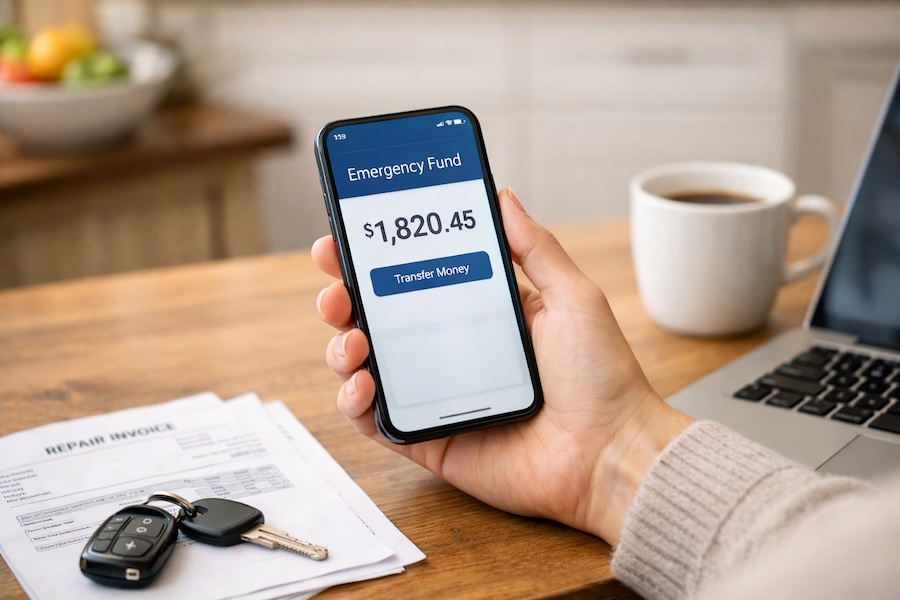
It helps to step back and simplify the definition.
An emergency is anything that disrupts your ability to live normally or puts pressure on your essential responsibilities. It’s the kind of situation that, without a buffer, would force you into debt, stress, or difficult trade-offs just to stay afloat.
It doesn’t need to fit into a perfect category. It just needs to clearly affect your stability.
If you think about it this way, the purpose of the fund becomes easier to trust. It’s not there to cover every unexpected expense. It’s there to protect your baseline when something important shifts.
If you want a deeper understanding of that foundation, revisiting The Real Purpose of an Emergency Fund can help anchor this idea.
What it’s not for
A lot of the confusion comes from situations that feel reasonable, but don’t actually threaten your stability.
An emergency fund isn’t meant for upgrades, convenience, or things that can be planned for with a little time. It’s not about improving your situation—it’s about preventing it from getting worse.
That doesn’t mean you need strict rules or a long list of restrictions. It just means staying aware of the difference between something that protects your life as it is and something that simply makes it more comfortable.
This is also where it helps to separate your money into different roles. If you’ve already set aside money for planned expenses, like in Emergency Fund vs Sinking Funds, it becomes much easier to see what belongs where.
When to use an emergency fund without overthinking it
This is the part that usually needs the biggest shift.
To Use an emergency fund correctly is not a mistake. It’s the whole point.
The money is there so that when something important goes wrong, you don’t have to create a bigger problem to solve it. You don’t have to rely on credit cards, delay something critical, or carry extra stress while you figure it out.
When you use the fund in the right situation, nothing has gone backward. You’ve just used a system exactly the way it was designed to work.
In fact, this is the same idea behind building small, consistent financial habits. The effort you put in earlier shows up later when it matters most, even if it’s not always obvious in the moment.
When it feels unclear
Not every situation will feel obvious, and that’s where most people get stuck.
Some expenses sit in that middle space where you can justify using the fund, but also feel like maybe you shouldn’t. In those moments, it helps to step away from the details and ask a simpler question.
Is this protecting my stability, or just improving my comfort?
That question tends to bring things back into focus. It doesn’t give you a perfect answer every time, but it usually points you in the right direction.
Over time, as you make a few of these decisions, you start to trust your judgment more. The process becomes less about rules and more about alignment.
A calmer way to think about using emergency savings
You don’t need to get every decision exactly right.
What matters is that your choices match the purpose of the fund. You built it to give yourself space when life gets unpredictable, and that’s exactly when it should step in.
Using it doesn’t erase your progress. It proves that your effort created something real—something that can support you when you need it.
And once it’s used, there’s no need to rush or overcorrect. You simply rebuild it the same way you built it the first time: slowly, consistently, and without pressure.
If you want a simple way to approach that next step, How to Rebuild Your Emergency Fund After Using It walks through how to reset without starting over.
That’s how this works over time. Not perfectly, but in a way that keeps you steady.